Post updated March 1, 2026. This post may contain affiliate links, which means I may receive commissions if you choose to purchase through links I provide (at no extra cost to you). Thank you for supporting the work I put into this site!
Earlier today, I went to Mr. Tofu, my favorite Korean restaurant in Las Vegas, for a seafood (Soon) tofu soup loaded with shrimp, clams, and mussels. This Asian eatery serves its tofu bowls with fresh kimchi and rice on the side, and sometimes they bring out little small plates. When the soup comes, you put a small amount of rice on your spoon, then dip it into the soup.
The food at this restaurant is always incredibly fresh, high in quality, and absolutely delicious! Another reason I continue eating here is the fact this restaurant serves clean rice. What is clean rice, you ask?
Clean rice is rice that has been rinsed thoroughly before cooking. If you eat lots of rice, you can tell when it has been cleaned, and when it hasn’t. I won’t say where, but I’ve eaten at plenty of restaurants that serve unwashed rice, and I won’t be eating at those places again.
What Are the Benefits Of Cleaning Rice?
Rice may be a whole grain, but it still goes through some processing, to a degree. That said, it’s difficult to know exactly what your rice has endured and been exposed to throughout processing. While we hope food manufacturers and millers have our best interests at heart when it comes to our health, you just never know what goes on at the rice mill.
Washing your rice rinses away chemicals, dirt, and other random debris residing on the rice. In fact, this 2012 Consumer Reports article says most brands of rice—especially American brands—contain trace amounts of arsenic. Arsenic increases your risk for skin problems and a number of cancers. Some brands of rice have even been found to contain talc.
Another top benefit to cleaning rice is eliminating extra starch, which results in fluffier rice. Rinsing away the starch also helps it cook better on stove top or in the pressure cooker.
My household consumes a LOT of rice, so I usually buy 20-pound bags of rice among the international brands available at Asian or Mexican markets. I typically avoid any rice processed here in the U.S. The quality just isn’t the same.
How To Clean Your Rice
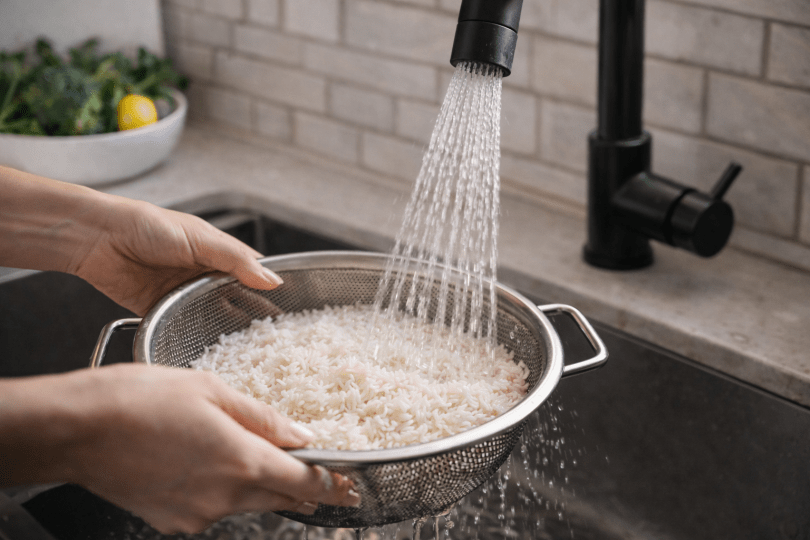
Washing rice is really easy. Here’s what to do:
- Pour the desired amount of rice into a fine strainer. I use this convenient rice-washing strainer by Inomata, which was only a few dollars on Amazon at the time, pre-pandemic. It’s the only strainer I have, and it also works well for pasta, potatoes, and lots of other stuff. It looks like there are much fancier ones now, like this stainless steel one by DOPMEP that says you can use it for quinoa, too. Wow!
- Fill the strainer with enough water to submerge the rice fully.
- Use your hand to swish the rice around in the bowl or strainer. You’ll notice that the water turns an opaque, milky-white color. This is the starch and other debris you’re washing away from the rice.
- Carefully pour out all the water without losing any rice.
- Refill the strainer with fresh water.
- Swish the rice around with your hand as before, then rinse out as needed. Repeat this step again, if desired. Voila! Your rice will now be clean and ready for cooking!
The amount of water you add to the rice at this point depends on the type of rice, or your personal preference.
If you get into the habit of washing your rice every time, you’ll start noticing a huge difference in its taste. You might become a rice snob like me and stop eating at places that serve gross rice.
Do you wash your rice, and if so, what other tips and tricks do you have?
 Dreamworld Health